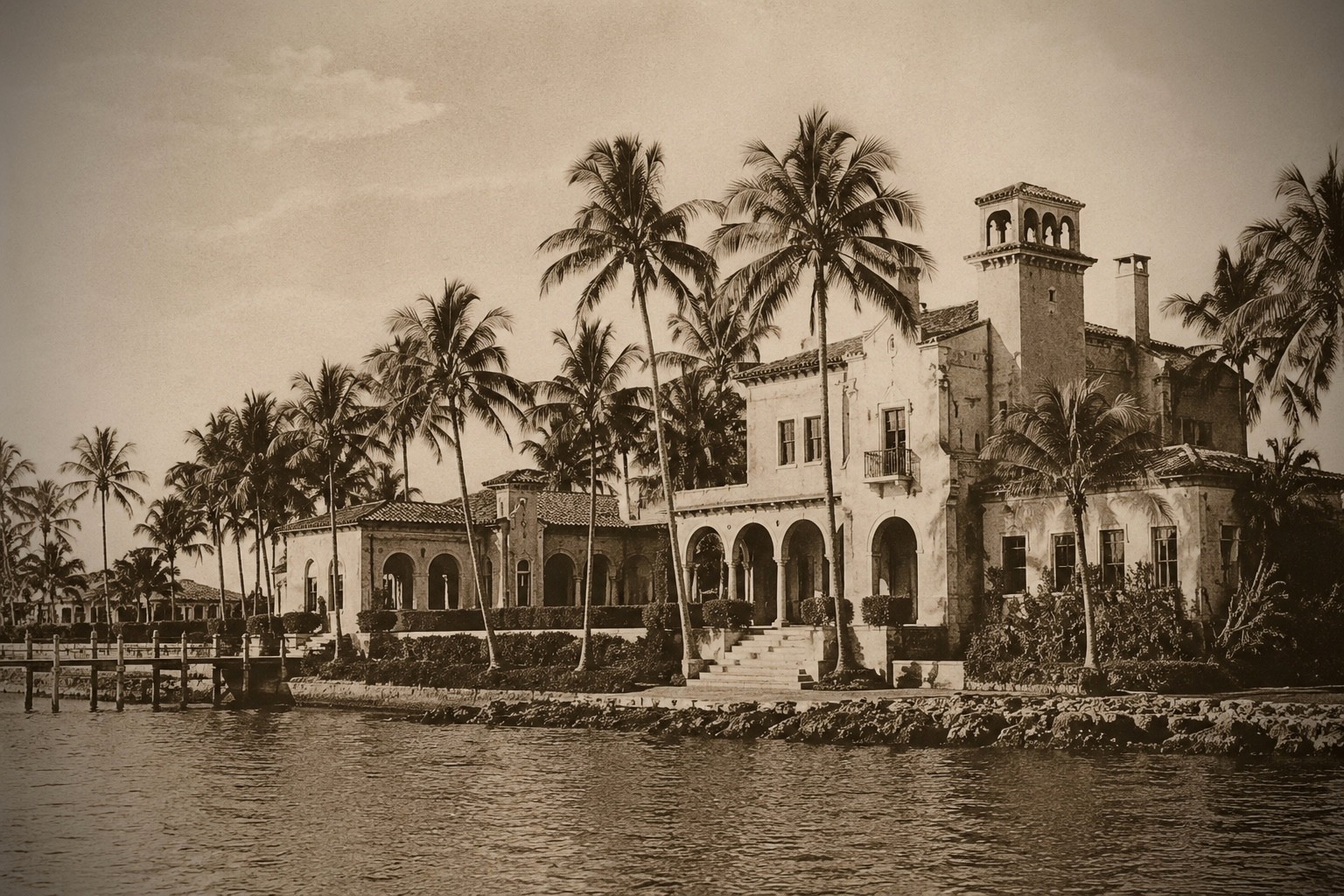
The Vanderbilt Era
One of the most celebrated chapters in Fisher Island’s history began when the island became associated with members of the Vanderbilt family. During the early twentieth century, the Vanderbilts were among America’s most prominent families, known for their influence in business, transportation, philanthropy, and society.
The island eventually became home to an extraordinary waterfront estate that reflected both the architectural tastes and social culture of the era. Designed in a Mediterranean Revival style that remains closely associated with South Florida’s historic architecture, the Vanderbilt residence became a landmark property overlooking Biscayne Bay.
During this period, Fisher Island functioned less as a residential community and more as a private retreat. Guests arriving by yacht or private vessel experienced a level of exclusivity rarely found elsewhere in the region. The island’s natural beauty, seclusion, and waterfront setting made it an ideal destination for recreation, entertainment, and social gatherings.
The Vanderbilt years helped establish many of the qualities that continue to define Fisher Island today. Privacy, elegance, exclusivity, and a strong connection to the water became central characteristics of the island’s identity. The estate itself served as both a residence and a symbol of a lifestyle that blended luxury with a uniquely South Florida sense of place.
Although ownership and land use would evolve significantly in later decades, the Vanderbilt era remains one of the most iconic periods in the island’s history. The architecture, stories, and legacy of this chapter continue to influence how Fisher Island is perceived by residents, visitors, and historians alike.
Today, the Vanderbilt Mansion stands as one of the island’s most recognizable historic landmarks and serves as a tangible connection to a period that helped shape Fisher Island’s enduring reputation.